
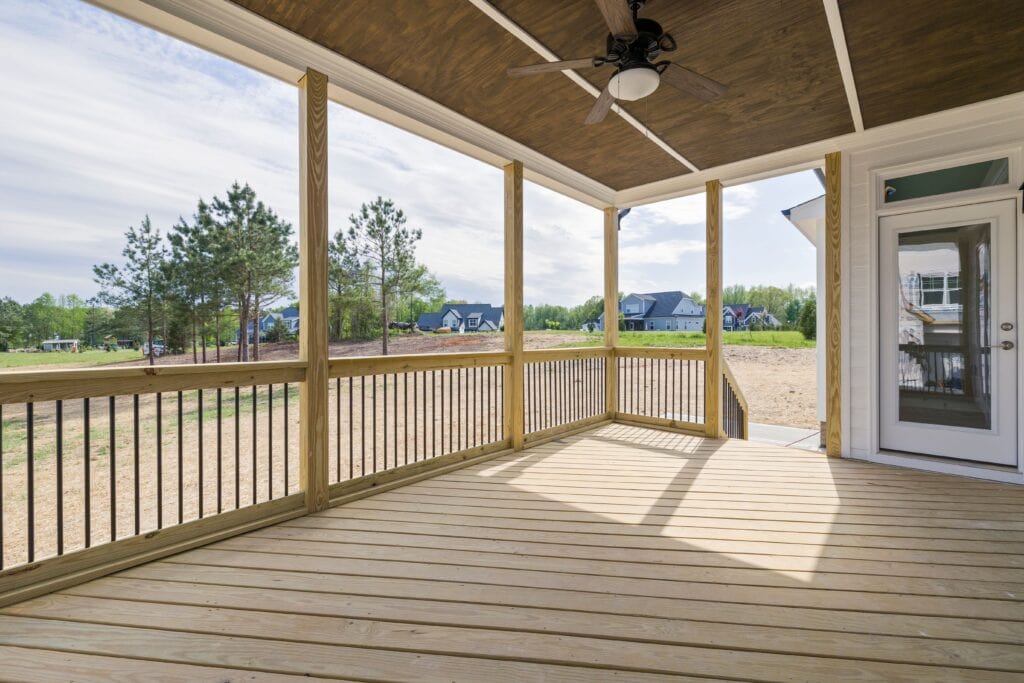
Choosing between a composite vs. wood deck usually comes down to what matters most to you: upfront cost, maintenance, lifespan, and appearance. Both materials can work well for Northern Indiana homes, but they handle weather and wear differently. Understanding the composite decking pros and cons alongside the strengths and drawbacks of wood can help you choose the best deck material for your home and budget.
Upfront Cost
Wood costs less to install than composite in most cases. Pressure-treated lumber is typically one of the more affordable decking options, while cedar costs more but offers a distinctive natural appearance. Composite decking usually requires a larger upfront investment because the decking material itself tends to cost more than traditional wood.
The starting price is only one part of the decision. Wood carries recurring upkeep costs that composite largely avoids. If you expect to stay in your home for a long time, it helps to consider what you’ll spend over the life of the deck along with how much ongoing care you’re comfortable taking on.
Maintenance
Wood requires more routine maintenance than composite. Regular cleaning helps remove dirt and debris, while staining or sealing every few years can help protect the surface from weather and moisture. You’ll also want to periodically check for splinters, cracked or loose boards, and signs of deterioration so small problems can be addressed early.
Composite decking needs less routine care. It doesn’t require staining or sealing, and occasional washing is generally enough to remove ordinary dirt and debris. Low maintenance doesn’t mean no maintenance, though. Mold or mildew can develop where dirt and organic material collect, and composite boards can be scratched or scuffed, so it’s important to follow the care recommendations for the specific product you choose.
Lifespan
Composite decking generally lasts longer than wood decking, although the lifespan of either material depends on the product and installation. For wood, the species, exposure to moisture, construction details, and overall condition all play a role. Water that stays trapped around boards or structural components can contribute to rot and shorten the life of the deck.
Composite decking is designed to resist rot and insect damage, and many products come with long manufacturer warranties. Proper installation still matters with either material. Bail Home Services considers details such as materials, layout, stairs, railings, lighting, and access as part of its approach to deck construction in Goshen, helping homeowners choose the right fit for their home.
Appearance
Wood gives you natural grain, variation, and texture that manufactured decking can’t reproduce exactly. Cedar in particular is often chosen for its warm appearance, while pressure-treated wood can be finished in a range of colors. Wood also changes as it ages. If it’s left untreated, the surface will gradually weather to a gray color, which some homeowners like and others prefer to prevent.
Composite offers a more consistent appearance from board to board and comes in a wide range of colors and wood-look patterns. Many newer products are designed to hold their color and appearance longer than unfinished natural wood. Still, looks are personal. Some homeowners prefer the consistency of composite, while others like the texture, variation, and feel of real wood.
Climate Considerations for Northern Indiana
Northern Indiana decks have to handle freezing temperatures, lake-effect snow, humidity, rain, and strong summer sun. Those seasonal changes can be especially demanding on wood. Repeated exposure to moisture and drying can contribute to warping, cracking, and deterioration. For any deck, prolonged snow loads and repeated freeze-thaw cycles can also put additional stress on framing, fasteners, and surface materials over time.
Local weather still matters with composite. Homeowners considering composite decking in Northern Indiana should keep in mind that boards exposed to direct summer sun can become hot, especially in darker colors. Snow and ice also require some care during the winter. Many composite manufacturers recommend using a plastic shovel rather than a metal-edged shovel when clearing snow because metal can scratch or damage the surface.
Planning a New Deck in Goshen?
There isn’t one deck material that’s right for every homeowner. Your budget, maintenance preferences, desired appearance, sun exposure, and plans for the space can all shape the choice between wood and composite. If you’re considering a wood or composite deck in Goshen, Bail Home Services can help you compare the trade-offs for your home and priorities. Reach out to our team to learn more about planning a new deck.